
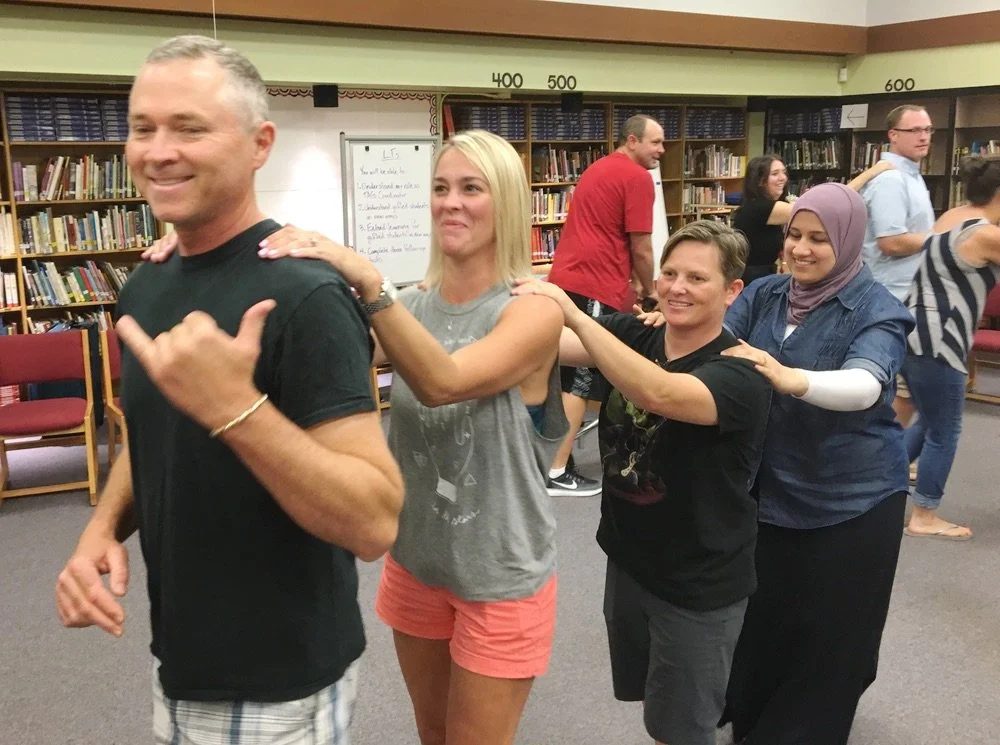
Improv Classes vs. Toastmasters: Which One Fits You Best?
Both are great options to become more effective at work and boost confidence with public speaking. We compare both to help you decide where to start.
If you’re looking to feel more confident speaking in front of groups, thinking on your feet, or communicating more naturally, you may be deciding between Toastmasters and improv classes.
Both are respected, effective options. They just focus on different parts of the communication puzzle. This page lays out the similarities, differences, and trade-offs—so you can decide which one best matches your goals.
What Toastmasters Does Well
Toastmasters has helped millions of people become better speakers, and it has a strong, time-tested structure.
Toastmasters is especially good if you want to:
Practice delivering prepared speeches
Improve organization and clarity
Receive specific, thoughtful feedback
Build confidence giving a speech in front of a group
Develop leadership and facilitation skills
If your goal is to give better presentations or formal speeches, Toastmasters can be an excellent fit.
What Improv Classes Do Differently
Improv classes start from a different place: instead of preparing ahead of time exactly what to say, you practice being comfortable when you don’t know what’s coming next.
In an improv class, you work on:
Speaking confidently without notes or scripts
Responding calmly to surprises
Listening and building on others’ ideas
Staying present instead of overthinking
Recovering quickly when things don’t go as planned
These skills show up constantly—in meetings, conversations, interviews, and everyday interactions.
A Few Key Differences
Prepared vs. Real-Time Communication
Toastmasters focuses on planned speeches—like delivering a talk at a conference. Improv focuses on real-time communication—like presenting in a meeting and answering questions. Most people use both in real life, but many people find they have fewer chances to practice the unscripted moments. That’s where improv shines.
Evaluation vs. Experience
Toastmasters provides clear evaluations and goals. If you like having a scorecard to know exactly how you did, Toastmasters will feel comfortable. In contrast, improv builds confidence through repetition, play, and experience. There’s no “right or wrong” answers in improv. One is more analytical; the other is more felt.
Individual vs. Collaborative
Toastmasters centers on individual speakers. Improv is collaborative by design—you’re always working with others, not in front of the group all alone.
What Each One Feels Like
This is often the deciding factor, even more than the skills themselves.
What Toastmasters Feels Like
Toastmasters tends to feel:
Structured and organized — meetings follow a predictable format
Professional and focused — clear roles, goals, and evaluations
Individual — most of the time is spent on one person speaking at a time
Quietly supportive — encouragement comes through feedback and progress
Many people appreciate this clarity and order. If you like knowing exactly what’s expected, enjoy preparing in advance, and want a calm, business-like environment, Toastmasters can feel comfortable and reassuring.
That said, it can also feel:
A bit formal
More like practice than play
Less social outside of scheduled speaking roles
What Improv Classes Feel Like
Improv classes feel very different.
Most students describe improv as:
Fun and energetic — laughter is common, even when you’re learning
Collaborative — you succeed together, not alone
Low-pressure — mistakes are expected and shared
Human — you’re talking with people, not presenting to them
Because everyone is participating at the same time, improv tends to build connection quickly. You’re listening, reacting, supporting one another—and that naturally leads to camaraderie.
It’s common for people to:
Make friends in class
Look forward to sessions as a highlight of their week (no prep required)
Feel less like they’re “working on themselves” and more like they’re enjoying the process
Why This Feeling Matters
Confidence doesn’t only come from repetition—it comes from emotional safety.
Toastmasters builds confidence through structure and evaluation.
Improv builds confidence through play, trust, and shared experience.
If your goal is to become more comfortable speaking in front of others, the environment you’re practicing in can make a big difference in how quickly that comfort shows up.
Which Is a Better Fit?
You may prefer improv classes if you want to:
Feel more relaxed speaking in front of others
Think more quickly and clearly in the moment
Worry less about saying the “right” thing
Improve everyday communication, not just speeches
Learn in a supportive, low-pressure environment
You may prefer Toastmasters if you want to:
Practice structured speeches
Get detailed feedback on presentations
Work toward specific speaking goals
Focus on formal or professional speaking situations
Many people find that improv builds comfort and confidence first, while Toastmasters helps refine structure later.
Why People Often Start with Improv
Improv lowers the stakes. Because mistakes are expected—and even useful—people tend to relax faster than they expect. Confidence grows naturally, without the pressure to “perform well.”
For many students, that comfort carries over into presentations, meetings, and public speaking situations they care about most.
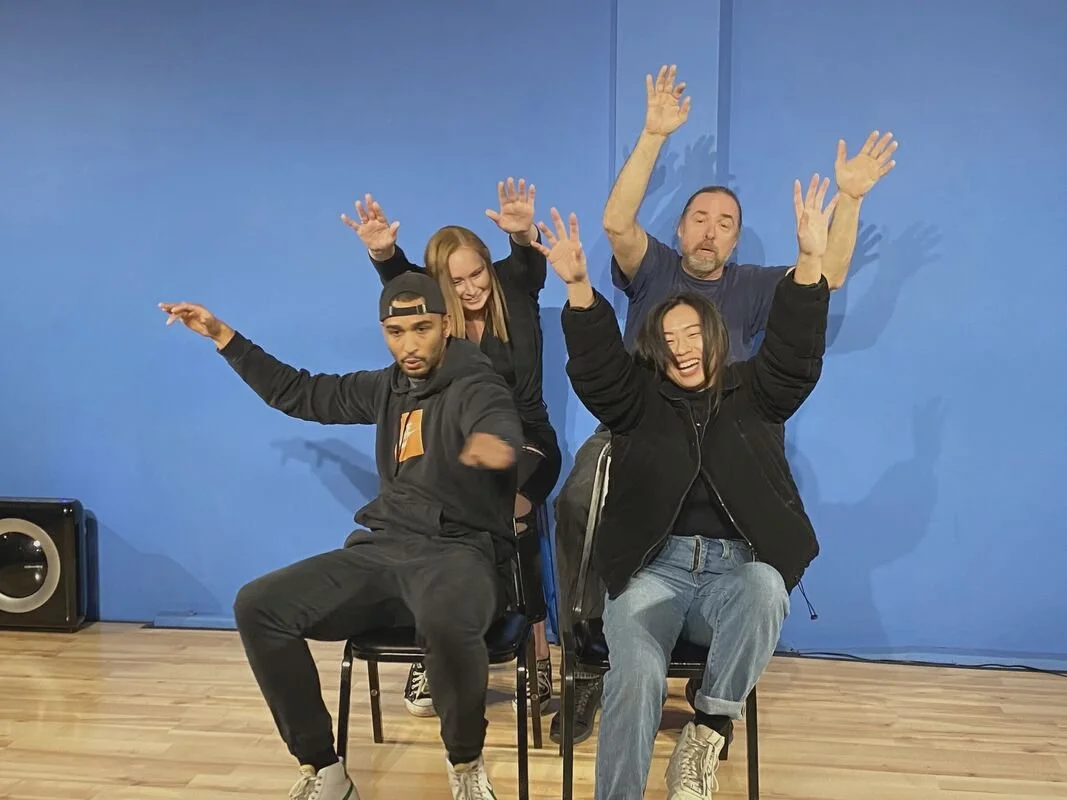
Try an Improv Class and See How It Feels
If you’re considering Toastmasters because you want to feel more confident, comfortable, and capable speaking in front of groups, improv classes may be worth trying first.
No experience required.
No memorized speeches.
No scorecards or homework.
Just practical skills you can use right away.

“I took my first improv class because I wanted to get more comfortable presenting at work. What I didn’t expect was to find a new family and make incredible friends.”
> Hadas Cassorla